Shipping sperm internationally is possible, but it's far from a simple courier booking. Every destination country sets its own rules on what can enter, who can receive it, and what paperwork has to travel with the sample. Get one document wrong and a shipment can sit in customs long enough to put the sample at risk, even inside a properly charged dry shipper. This guide covers what's actually required, country by country, and what the whole process costs from start to finish.
Can You Ship Sperm Internationally?
In most cases, yes, but not to every country and not without approval on both ends. Some destinations restrict imports outright: the UK abolished donor anonymity back in 2005, so sperm from an anonymous donor generally can't be used in a UK–licensed clinic unless the donor agrees to be identifiable to any resulting child at 18. Other countries allow imports only through a licensed local clinic rather than directly to an individual recipient.
In the EU, cross–border import of tissues and cells, including donor sperm, currently falls under Directive (EU) 2015/566, with Regulation (EU) 2024/1938 on substances of human origin set to replace it from 7 August 2027; individual EU clinics can still get approval to import from abroad, but direct import to recipients is far more limited than it used to be.
Canada is its own case: sperm imports fall under Health Canada's Processing and Distribution of Semen for Assisted Conception Regulations, and the donor–testing standards there are strict enough that many US sperm banks simply can't meet them, which limits which shipments can legally go through. The short version: shippability depends entirely on the destination country and, often, on whether the receiving clinic already holds the right import status.
Documents and Country Rules
Paperwork requirements vary by country, but a few patterns show up repeatedly. In Great Britain, a clinic importing gametes or embryos from outside GB needs to hold an HTA licence as an Importing Tissue Establishment (ITE); only a licensed clinic can apply for this, not an individual recipient. This requirement has applied to imports from the EEA since 1 July 2021, and it's separate from the rules for Northern Ireland, where GB itself is treated as a third–country supplier rather than the EEA import route applying.
Beyond the UK, most international shipments also need: donor consent and screening documentation matching the destination country's health–authority standards, a customs declaration with the correct commodity code for biological material, and confirmation that the receiving clinic or address is legally allowed to accept the shipment.
Because these requirements shift country by country and change over time, it's worth confirming current rules directly with the destination clinic or a customs broker before booking a shipment, not relying on general guidance alone.
Step–by–Step: How an International Sperm Shipment Works
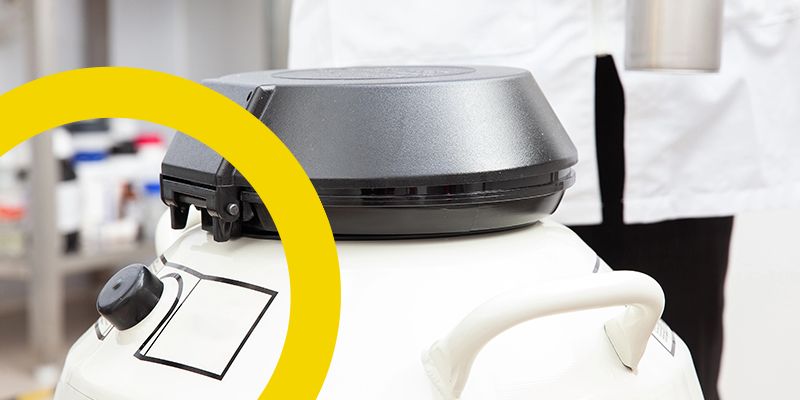
Once the documentation is sorted, the physical process follows a fairly consistent sequence. First, the sending bank confirms the receiving clinic or recipient's import eligibility and collects the required consent and screening paperwork. Next, the dry shipper is charged with liquid nitrogen and left to fully absorb it, so no free liquid remains before the vials go in. The vials are then loaded, labeled, and paired with the export documentation, and the sealed shipper goes into an outer box built for cryogenic cargo.
From there, it ships via a carrier experienced in cross–border cryogenic transport, clears export customs in the origin country, and clears import customs on arrival – the step most likely to cause delays if documentation is incomplete. Finally, the receiving clinic or recipient inspects the shipper on arrival, confirms the vial count against the paperwork, and moves the sample into proper long–term storage right away.
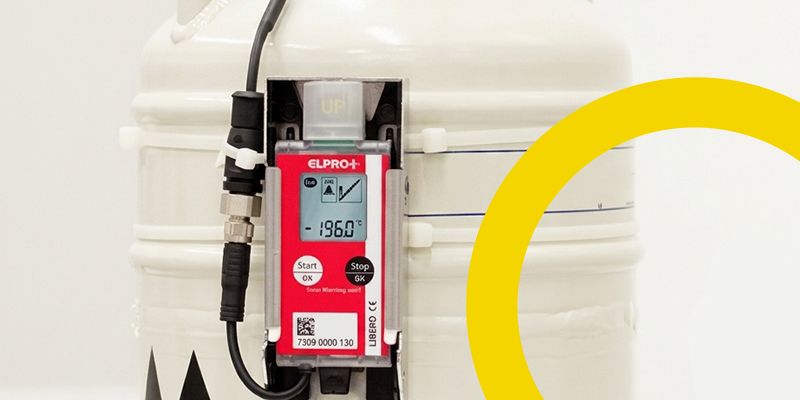
A validated dry shipper used for this kind of transport typically holds cryogenic temperature well below −150°C for roughly two weeks, which gives the shipment a real buffer against customs delays along the way.
Cost of Shipping Sperm Internationally
International shipping costs more than domestic delivery, and the total isn't just a courier fee. Expect to budget for the shipping charge itself, which is usually quoted individually rather than shown as a flat rate, since it depends on distance, urgency, and the destination country's customs handling. On top of that, some countries charge import duties or processing fees tied to the shipment's classification as biological material, and a dry–shipper deposit is common if the container needs to be returned.
Below is indicative pricing for a few popular routes; for rates and delivery times across every destination we serve, see here.
| DESTINATION | DELIVERY* COST * |
|---|---|
| The USA ⇆ Europe | $ 3,650 - 7,255 |
| The USA ⇆ Latin America | $ 3,600 - 6,750 |
| Europe ⇆ Latin America | € 4,000 - 7,020 |
| Europe ⇆ Asia | € 4,100 - 7,425 |
| Australia ⇆ Asia | € 4,700 - 6,345 |
Frequently Asked Questions
- Can any sperm bank ship to any country?
No. Shippability depends on the destination country's import rules and, in many cases, on whether the receiving clinic already holds an active import authorization for that supplier.
- How long does the shipment stay viable in transit?
A properly charged dry shipper typically holds safe cryogenic temperature for around two weeks, though the exact window depends on the specific container.
- Does the recipient need to arrange customs clearance themselves?
Sometimes. Some banks and shippers handle clearance as part of the service, while others require the recipient or receiving clinic to manage permits and customs directly.
- Why do some countries block anonymous donor shipments?
Certain countries require donors to be listed on a government registry, which conflicts with anonymous–donor programs and prevents those shipments from clearing legally.
- Is international shipping more expensive than domestic?
Yes, usually significantly, once shipping fees, potential import duties, and any clinic administrative charges are factored in.