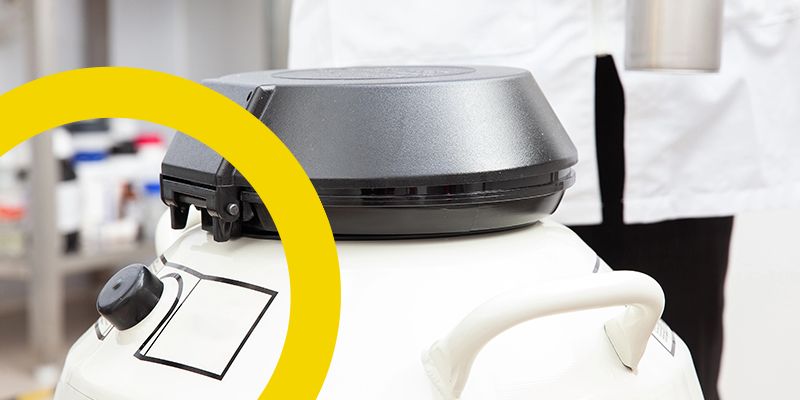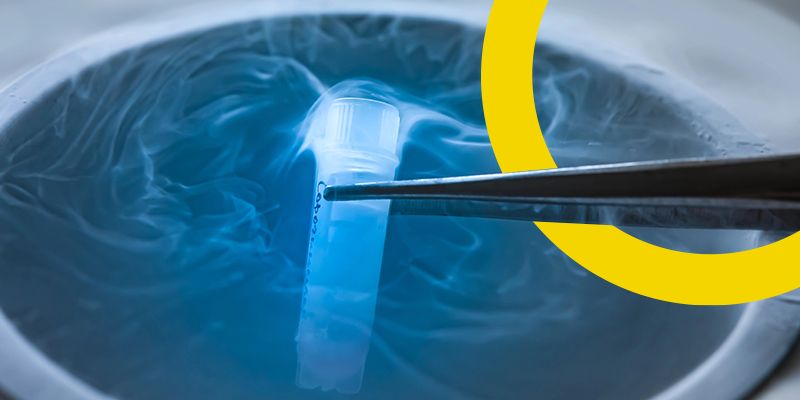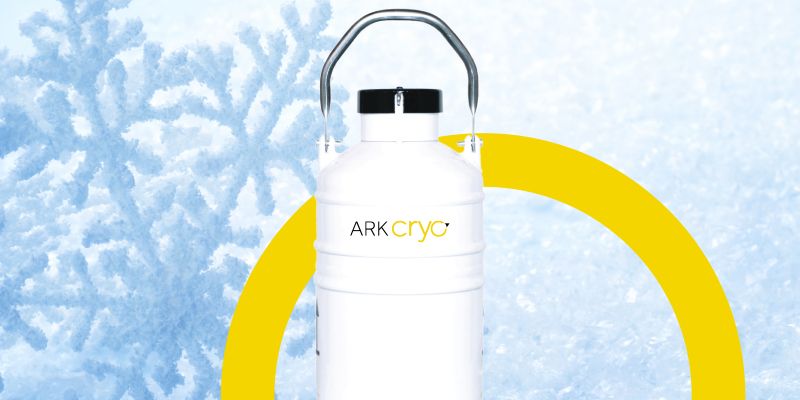
Every frozen embryo, egg, or sperm sample that crosses a border for assisted reproduction travels inside one specific piece of equipment: a dry shipper. It looks like a simple metal canister, but underneath that plain exterior is a carefully engineered system designed to hold biological material at cryogenic temperature for days, sometimes weeks, without a single drop of liquid nitrogen ever spilling. For clinics and intended parents relying on international cryoshipping, understanding how a dry shipper actually works helps explain why this equipment is the only real option for transporting reproductive biomaterials by air.
What Exactly Is a Dry Shipper?
A dry shipper, also called a vapor shipper or cryoshipper, is a vacuum−insulated container built to transport biological specimens using the vapor phase of liquid nitrogen rather than the liquid itself. The word “dry” refers to the absence of free−flowing liquid nitrogen inside the unit during transit, not to a lack of cooling. Samples still sit in an environment as cold as −196°C; they simply aren’t submerged in liquid. This distinction matters enormously for air transport. A standard laboratory dewar holds free liquid nitrogen, which continuously boils off and builds internal pressure is a serious hazard on an aircraft. A dry shipper eliminates that risk entirely, which is why it is the only cryogenic container accepted for shipping reproductive biomaterials internationally.
How a Dry Shipper Keeps Samples at −196°C
The Absorbent Core
Inside every dry shipper is a porous absorbent material, typically a hydrophobic calcium silicate compound, zeolite, or specialized foam, that lines the inner chamber. When liquid nitrogen is poured in during charging, this material physically locks the cryogen into its microscopic pore structure. No free liquid remains, yet the absorbed nitrogen continues to slowly release cold vapor for the entire duration of the shipment.
Vacuum Insulation
Surrounding the inner chamber is a vacuum−sealed double wall, the same principle used in a thermos. Because there is virtually no air between the inner and outer shell, heat has almost no medium through which to travel from the outside environment to the sample chamber. This is what allows the interior to stay near −196°C for days while the exterior of the shipper remains safe to handle.
Vapor−Phase Storage
The samples themselves are never in direct contact with liquid nitrogen. They are suspended in the ultra−cold vapor that fills the chamber above the absorbed nitrogen. This vapor−phase environment keeps temperatures reliably below −150°C – well under the −135°C glass transition point critical for preserving embryos, eggs, and sperm, while also eliminating the cross−contamination risk that comes with samples sitting in shared liquid nitrogen.
Why Dry Shippers Are the Only IATA−Compliant Option
Free liquid nitrogen is classified internationally as UN 1977, a dangerous good with significant restrictions on air transport. Because a properly charged dry shipper contains no free liquid, it typically ships under a non−hazardous classification, which is what makes routine international air transport of reproductive biomaterials possible at all. This is also why every dry shipper used for cryoshipping must be verified as fully absorbed and leak−free before it is ever handed over to a carrier.
How Long Does a Dry Shipper Hold Temperature?
Holding time depends on the specific model, its absorbent volume, and how recently it was charged, but validated dry shippers used in reproductive cryoshipping typically maintain safe cryogenic temperatures for seven to twenty−one days. This buffer is what allows a shipment to survive customs inspections, layovers, and unexpected delays without putting sample viability at risk, provided the shipper was fully charged and validated before departure.
Best Practices for Using a Dry Shipper in International Transit
Getting the benefits of this technology depends on how the shipper is prepared and monitored, not just on the hardware itself: Charge the shipper for the full recommended period to fully saturate the absorbent core before loading samples. Verify there is no residual free liquid nitrogen before sealing and dispatch, using a tilt or weight check as specified by the manufacturer. Use a validated model with a known, tested holding−time curve rather than assuming all dry shippers perform equally. Include temperature data loggers so that clinics on both ends can confirm the cold chain was unbroken throughout transit. Plan the shipping route around the shipper’s validated holding time, building in a safety margin for customs delays.
How ARK.CRYO Uses Validated Dry Shippers
ARK.CRYO relies exclusively on dry shippers that are charged, tested, and monitored according to strict internal protocols before every international shipment. Our team verifies full absorption prior to dispatch, tracks each shipment with temperature data loggers, and builds routing schedules around each shipper’s validated holding time rather than its theoretical maximum. Combined with the correct export and import documentation, this approach is what allows embryos, eggs, and sperm to travel across continents while staying reliably below −150°C from pickup to delivery.
The Quiet Engineering Behind Every Safe Arrival
A dry shipper’s plain metal exterior hides a precise combination of absorbent chemistry and vacuum insulation, engineered specifically to keep reproductive biomaterials safely frozen without a drop of liquid nitrogen in sight. Understanding this technology is what separates a shipment that arrives exactly as it leaves the clinic from one that doesn’t, which is why ARK.CRYO treats every dry shipper, and every degree of its holding curve, as mission−critical. . It’s also the reason clinics and intended parents can hand over a shipment and stop thinking about it: once the science is this precise, the logistics can finally feel like a stress−free journey.